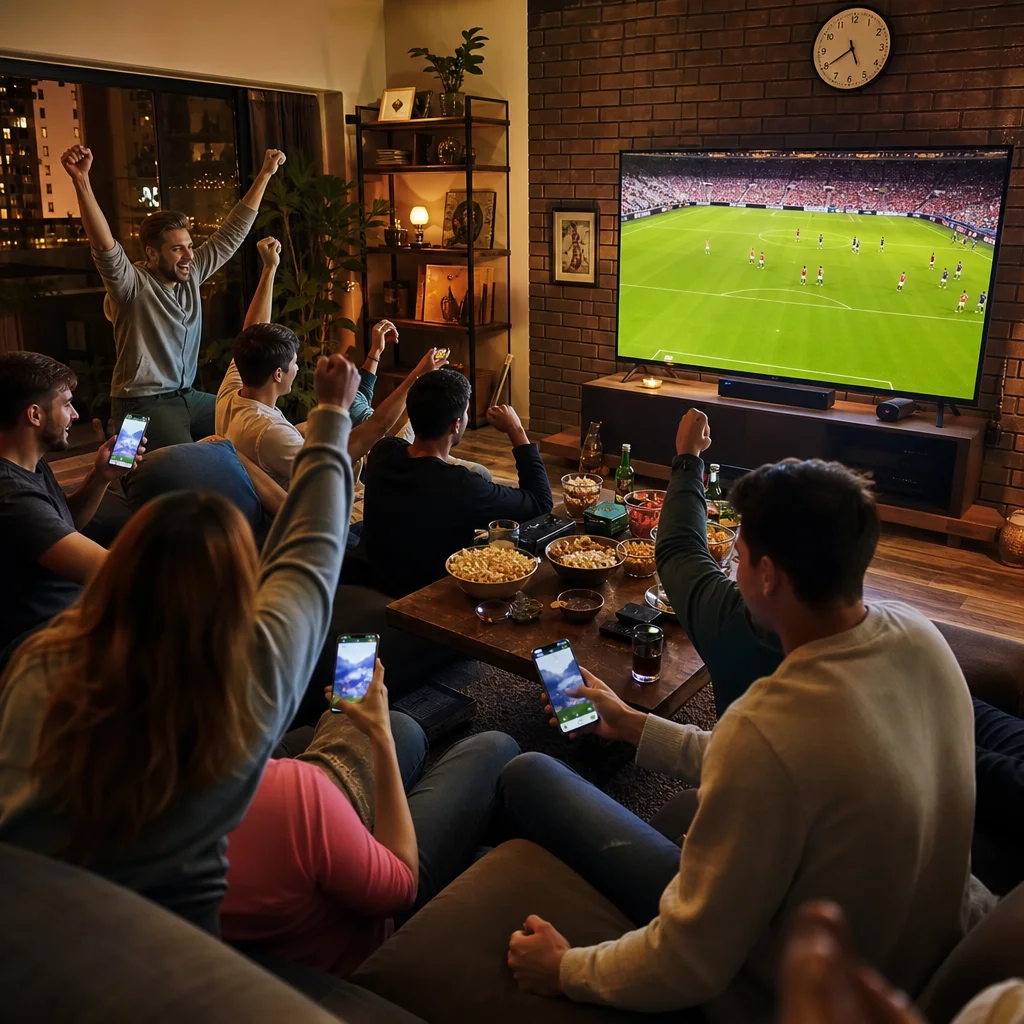
How Modern Sports Fans Blend Home Entertaining with Digital Engagement
Watching a high-stakes match used to follow a rigid script: friends arrived, snacks were placed on the coffee table, and everyone stared at a single television for three hours straight. That traditional model still exists, but it has evolved dramatically. Today, smartphones light up during tactical timeouts, group chats explode with commentary after every referee review, and someone on the couch is actively tweaking their fantasy lineup while another guest snaps a picture of the charcuterie board. Modern sports fans no longer choose between hosting an in-person gathering and participating in the global online conversation. They masterfully orchestrate both at the same time, transforming a simple living room into a multi-layered hub of modern entertainment.
The Living Room Becomes a Modern Stadium
Home hosting has always revolved around physical comfort, but the contemporary sports experience demands atmosphere as well. Fans routinely invest in Dolby Atmos soundbars, bias lighting behind screens to reduce eye strain, and modular seating configurations designed for maximum visibility. Some enthusiasts even deploy short-throw laser projectors to turn a bare wall into a massive 120-inch display, while others carefully arrange furniture to ensure every spectator has an unobstructed line of sight. The objective isn’t to mimic a quiet movie theater; it’s to engineer a dynamic environment where guests can react loudly, leap to their feet during a breakaway, and settle right back down without missing a single second of action. When this physical setup clicks, attendees relax entirely and stay for the post-game analysis instead of drifting away at halftime.
There is also a critical logistical layer to consider. A living room full of passionate sports fans translates directly to a room full of power-hungry devices. Smart hosts anticipate this by placing heavy-duty power strips near the couch and configuring dual-band routers to handle multiple concurrent high-definition streams. Simple, proactive steps like these prevent the ultimate modern watch party disaster: the mid-game buffering wheel spinning while ten frustrated people simultaneously reach for their phones to check live scores.
The Second Screen Is Not a Distraction
Traditionalists sometimes worry that smartphones destroy the communal viewing experience. In practice, however, the second screen frequently elevates it. A quick glance down at a device can instantly settle a debate over a controversial offside call, confirm a star player’s injury timeline, or pull up an instant replay from an alternative camera angle. Active group chats with out-of-town friends bridge the gap between private living rooms and massive digital stadiums. The secret lies entirely in timing. Seasoned hosts treat the phone as a dynamic tool reserved for pauses, set pieces, and tactical lulls, rather than an active rival to the main broadcast. Many modern households even establish a friendly rule: devices down during the final two minutes of a close quarter, devices up freely during halftime.
This balancing act requires a specific digital literacy, one that younger generations have mastered instinctively. Growing up amidst multi-feed streaming platforms means they process information non-linearly without losing the narrative thread of the game. For them, spectating is never passive. It is an active ecosystem of live commentary, witty memes, and instant statistical research running parallel to the television feed.
Food as Part of the Ritual
Culinary execution is the silent engine driving any successful watch party. The most effective spreads are engineered for grazing rather than formal dining. Finger foods, sliders, loaded wraps, and shareable platters allow guests to eat easily with one hand while keeping their eyes locked on the screen. Timing is equally vital. A heavy, complex meal served right before a decisive penalty shootout is a recipe for post-match sluggishness. Experienced hosts lay out hearty appetizers early, transition to lighter snacks by the second half, and save something sweet for the final whistle. Beverage selections require identical forethought, offering a curated mix of craft beers, artisanal sodas, and sophisticated non-alcoholic mocktails to accommodate every guest.
Dietary restrictions become effortless to manage when the menu features clean, easily identifiable options. A buffet table featuring clearly labeled vegan, gluten-free, and allergen-friendly dishes eliminates awkward questions and keeps the energy flowing smoothly, preventing traffic jams in the kitchen when the clock is ticking down.
The Tech Setup That Actually Matters
Advanced gadgets are great, but only to a point. A rock-solid internet connection, a reliable streaming media player, and clean audio will solve 90 percent of your hosting challenges. Everything beyond that is luxury. Hosts looking to upgrade their setup should focus on the components that fail most frequently: upgrading the Wi-Fi router, keeping fresh remote control batteries on hand, and replacing frayed HDMI cables that have lingered behind the entertainment center for years.
- A high-speed broadband connection backed up by a mobile hotspot in case local ISP issues arise.
- A modern streaming device or console capable of running live sports apps without stuttering.
- A dedicated soundbar or bookshelf speakers to keep match commentary crisp without requiring maximum volume.
- A centralized charging station equipped with USB-C, Lightning, and micro-USB cables for varied devices.
- A backup remote control or a configured smartphone app to command the television seamlessly.
- Adjustable bias lighting that minimizes glare and reduces eye fatigue during evening kickoffs.
A Hosting Playbook That Works
Successful watch parties thrive on a flexible framework. Over-planning makes the evening feel rigid and clinical, while zero preparation guarantees missed kickoffs and stressed hosts. The sweet spot is a straightforward checklist that covers essentials while leaving room for spontaneous fun.
- Send digital invitations early, specifying the exact start time and required streaming apps since platforms vary.
- Test the primary video feed an hour before guests arrive to verify channel permissions and broadcast stability.
- Position food and beverage stations away from the primary seating area to keep liquid spills far away from phones and tablets.
- Pin a shared group chat link so remote friends can chime in with live reactions throughout the match.
- Establish a lighthearted house rule regarding device use during the nail-biting closing minutes of the game.
- Prepare a minimal cleanup station with trash bags and wipes to ensure post-game tidying takes minutes, not hours.
Managing Mixed Loyalties
Social groups rarely share a single allegiance. A living room split between rival fan bases often generates the absolute best watch party atmosphere, provided the fundamental tone remains respectful. Savory hosts set the boundary early: sharp tactical banter and good-natured teasing are heavily encouraged, but personal hostility or mocking someone for genuinely supporting their team is strictly off-limits. Pre-match score predictions add immediate stakes without financial pressure. Low-stakes wagers, such as the loser buying morning coffee or choosing the next movie night, keep the competitive spirit buoyant and fun.
Stats, Fantasy, and the New Water Cooler
Fantasy sports leagues have fundamentally rewired how fans consume matches, granting them a direct personal stake in fixtures they might otherwise ignore. A single defensive interception or a stoppage-time goal can completely flip a weekly league standings table. Advanced statistics apps, live win-probability meters, and instant highlight clips fill every micro-break in the action, while dedicated league messaging threads keep friends tethered across different time zones. This evolution explains why modern hosts proactively remind guests to bring their tablets along with their favorite beverages.
Keeping It Budget Friendly
Elevating your game-night hosting game requires zero luxury spending. Potluck formats naturally distribute ingredient costs while giving attendees a sense of investment in the party. An affordable entry-level projector, a borrowed Bluetooth speaker, and a strategically angled floor lamp can completely reinvent a modest apartment’s aesthetic. What guests remember years later isn’t the spec sheet of your television; they recall the collective roar, the shared inside jokes, and the electric atmosphere when an underdog pulled off an upset.
Making Room for Casual Guests
Not everyone packed into your living room is a die-hard tactical analyst. Spouses, children, and friends who showed up purely for the social aspect need alternative avenues for enjoyment. Setting up a secondary side table with a casual board game, streaming a parallel family film in an adjacent room, or carving out a conversational nook ensures the gathering works seamlessly for every personality type. Attentive hosts check in on casual visitors during natural breaks and keep speaker volumes calibrated so cheering doesn’t drown out normal conversation.
The Cleanup Routine Nobody Talks About
The final whistle should never signal the end of a host’s duties. A disciplined five-minute reset saves hours of exhausting labor the following morning. Empty glasses are gathered into bins, perishable foods are sealed and refrigerated, and power banks return to their charging stations. When helpful guests offer assistance, assign them micro-tasks; shared cleanup feels infinitely lighter and reinforces the communal spirit of the group. By the time the last visitor steps out the door, your living room should already look remarkably close to normal.
What Comes Next
Entertainment technology continues to accelerate at a blistering pace. Modern streaming ecosystems are actively refining synchronized co-watching features that keep geographically separated households perfectly aligned down to the millisecond. Interactive broadcast overlays now allow viewers to toggle camera angles, track individual player speeds, or view heatmaps directly on their primary screens. While spatial computing and immersive headsets remain relatively niche, they point toward an inevitable future where physical distance ceases to impact shared fandom. No matter how advanced the hardware becomes, the underlying human desire remains identical: a room full of people feeling profoundly connected to one another through the drama of sport.
The modern sports fan is a hybrid creator, acting as both a gracious physical host and an active digital participant. The television anchors the physical room, the smartphone acts as a portal to a global community, and thoughtfully curated food keeps everyone comfortable. None of this requires industrial-grade complexity. A stable internet connection, a simple menu, clear communication, and genuine attentiveness to your guests are more than enough. Blending home entertaining with digital engagement isn’t about owning the most expensive gear on the market; it’s about mastering the rhythm of knowing precisely when to look at the screen, when to look at your friends, and when to glance at your phone. Fans who master that delicate balance unlock the absolute best of both worlds, ensuring their watch parties remain legendary.
“