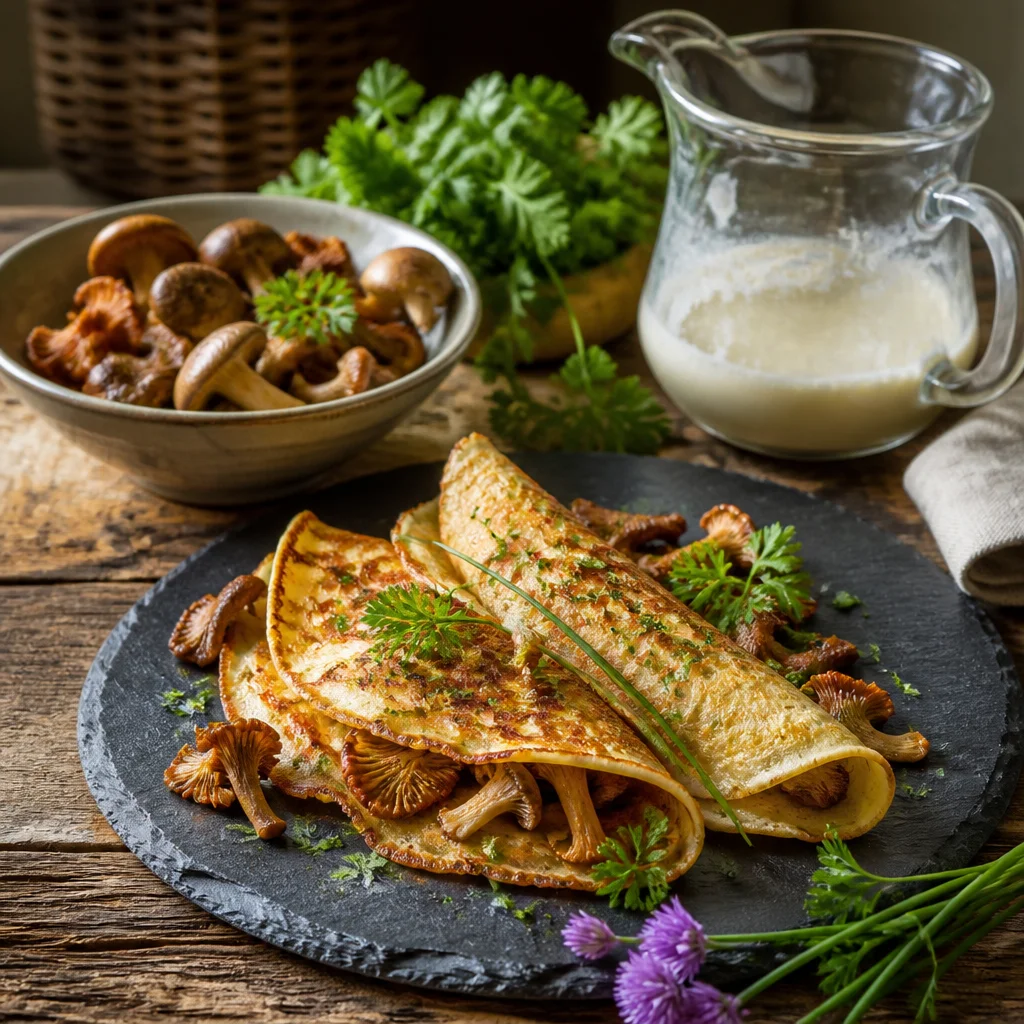
Why Savory Crêpes Deserve a Place in Your Weekly Rotation
Savory crêpes stand out as one of the most versatile and forgiving culinary canvases a home cook can master. Exceptionally thin, pliable, and structurally neutral, they effortlessly transform into wrappers, bases, or substantial standalone meals depending on the ingredients folded inside. Unlike their sweet counterparts, savory crêpes draw character from fresh herbs, artisan cheeses, earthy vegetables, and robust proteins. Best of all, they assemble in minutes once the batter undergoes its crucial resting period.
That brief resting phase represents the single non-negotiable rule of crêpe making: it allows the flour starches to hydrate fully and the gluten strands to relax, yielding tender, velvety crêpes rather than rubbery, tough disks. The dish scales effortlessly. A single preparation produces eight to twelve delicate rounds, making it ideal for a quick family supper or efficient multi-day meal prep. Cooled crêpes stack neatly between sheets of parchment paper, remaining viable in the refrigerator for up to three days or in the freezer for two months. Once you master the foundational base, filling them becomes an exercise in personal creativity rather than strict adherence to a recipe.
The Core Ratio Every Savory Batter Starts With
Successful crêpe batter relies on a steadfast mathematical proportion: one part flour, two parts liquid, and roughly one large egg per one hundred grams of flour. From this foundational skeleton, you can introduce fats, salts, and aromatic flavorings. A reliable, foolproof starting formula comprises 125 grams of all-purpose flour, 2 large eggs, 300 milliliters of whole milk, 2 tablespoons of melted unsalted butter, and a precise pinch of fine sea salt. This ratio creates a fluid, pourable batter that coats the back of a spoon and spreads effortlessly across a scorching hot surface.
Two operational adjustments elevate your results dramatically. First, weigh your flour with a digital kitchen scale whenever possible. Scooping flour directly from a bag packs it down tightly, introducing an excess of twenty grams or more that ruins the hydration ratio. Second, incorporate your liquid gradually while whisking continuously, stopping the moment the batter achieves absolute smoothness. Overworking the liquid mixture stimulates excessive gluten development, resulting in chewy, fragile crêpes that crack stubbornly upon folding.
Four Batter Variations Worth Keeping
1. The Classic All-Purpose Base
The standard formula serves as your daily workhorse. It browns evenly, folds without tearing, and withstands heavy, moisture-rich fillings such as creamed spinach or robust tomato ragù. Whole milk provides necessary richness, though a fifty-fifty split of milk and water produces a lighter, more delicate wrap. A single teaspoon of optional sugar does not sweeten the batter; instead, it caramelizes lightly during cooking to enhance visual appeal and savory depth.
2. Buckwheat Batter for a Rustic Flavor
Buckwheat flour introduces an earthy, assertive nuttiness that pairs brilliantly with forest mushrooms, smoked trout, and sharp alpine cheeses. Because buckwheat is entirely gluten-free, these crêpes demand structural reinforcement. Combine seventy percent buckwheat flour with thirty percent all-purpose flour, and allow the batter to rest for a minimum of two hours. The finished crêpes emerge darker, sturdier, and intensely flavorful.
3. Herb and Cheese Batter
Whisk two tablespoons of finely minced flat-leaf parsley, chives, or dill directly into the wet batter, alongside thirty grams of finely grated Parmigiano-Reggiano. This technique shines when serving crêpes alongside a simple, crisp green salad, as the flavor is baked directly into the wrapper. Ensure your herbs are thoroughly dried after washing, since lingering surface moisture causes the hot pan to sputter dangerously.
4. Buttermilk or Yogurt Batter
Replacing half of the standard milk with cultured buttermilk or thinned plain yogurt imparts a gentle, appetizing tang and a softer, melt-in-the-mouth crumb. This variation complements Mediterranean-inspired fillings such as roasted red peppers, briny olives, crumbled sheep’s milk feta, and herb-heavy chimichurri sauces. Avoid using thick Greek yogurt directly; thin it with water first to prevent a dense, pancake-like texture.
Technique: From Bowl to Pan Without Guesswork
Preheat a specialized nonstick crêpe pan or a well-seasoned cast-iron skillet over medium heat for a full three minutes before cooking the initial round. An insufficiently heated pan grips the batter aggressively, producing a pale, sticky failure. Wipe the cooking surface lightly with a paper towel dipped in neutral oil, pour roughly sixty milliliters of batter directly into the center, and immediately swirl the pan in a decisive circular motion to coat the entire surface thinly. This entire physical gesture should take no longer than three to four seconds.
Cook the initial side for sixty to ninety seconds, watching for the edges to lift away from the metal and appear dry and lacy. Flip the crêpe using a thin offset spatula or your fingertips, then cook the reverse side for a mere twenty to thirty seconds. Stack finished crêpes directly onto a warm plate; the residual steam trapped between the layers preserves their softness and pliability. For large dinner parties, keep the plate resting over a pot of gently simmering water or inside a low-temperature oven.
Ten Fillings That Turn Crêpes Into a Meal
Ham and Gruyère. The definitive benchmark. Lay a quality slice of cured ham on a warm crêpe, scatter a handful of freshly grated Gruyère, fold into neat quarters, and return to the pan until the cheese melts into a gooey interior. A spoonful of homemade béchamel elevates it to bistro standards.
Wild Mushrooms and Thyme. Sauté sliced cremini and shiitake mushrooms in butter with crushed garlic and fresh thyme leaves until deeply browned and caramelized. Deglaze the pan with a splash of heavy cream, season assertively with sea salt and cracked black pepper, and spoon generously into the center.
Spinach and Ricotta. Wilt fresh baby spinach, extract every drop of excess moisture using a kitchen towel, and blend with whole-milk ricotta, freshly grated nutmeg, salt, and pepper. Fold into the crêpes, arrange in a baking dish, and bake at 190°C for fifteen minutes under a light blanket of fontina cheese.
Smoked Salmon and Crème Fraîche. A zero-cook assembly option. Spread a thin layer of tangy crème fraîche over a warm crêpe, top with premium smoked salmon ribbons, capers, fresh dill fronds, and a bright squeeze of fresh lemon juice. Allow guests to assemble their own at the table.
Provencal Ratatouille. Slow-cooked zucchini, eggplant, ripe plum tomatoes, and bell peppers create a fragrant, juicy filling. Reduce the vegetable mixture thoroughly on the stove to concentrate flavors and eliminate excess liquid that might compromise the crêpe’s structural integrity.
Chicken and Tarragon. Shredded poached chicken breast folded into a delicate velouté sauce enriched with fresh tarragon and sharp Dijon mustard offers an elegant, reliable dinner party main course.
Seafood and Leek. Sweat thinly sliced leeks in sweet butter until translucent, fold in tender shrimp or flaked white fish, and finish with a splash of dry white wine and heavy cream. Maintain a thick, clinging sauce consistency.
Egg and Cheese Breakfast Crêpe. Crack a fresh farm egg directly onto a partially cooked crêpe in the pan, scatter sharp cheddar and chopped chives around the whites, fold the edges inward to form a protective square, and cook until the yolk remains gloriously runny.
Spiced Merguez Sausage. Brown crumbled merguez sausage with toasted cumin and smoked paprika, mix with charred sweet peppers, and serve alongside a cooling garlic-and-mint yogurt sauce.
Goated Cheese and Honey. The ultimate sweet-savory bridge. Warm creamy goat cheese with toasted walnuts and a fine drizzle of wildflower honey over a piping hot crêpe. This pairing works exceptionally well with the herb-infused batter variation.
Make-Ahead Strategy That Actually Works
Cook your complete batch of crêpes and allow them to cool completely on a wire rack before stacking them with parchment paper separating each unit. Enclose the stack within an airtight container or a heavy-duty zip-top bag, pressing out all excess air. To reheat, warm a dry skillet over medium heat and give each crêpe twenty seconds per side, or wrap an entire foil-sealed stack in a 150°C oven for ten minutes. Frozen crêpes separate effortlessly once thawed for one hour at normal room temperature.
Prepare your savory fillings up to two days in advance, storing wet components and sauces in separate airtight containers away from the crêpes until the final assembly moment. If you plan to bake a casserole dish of filled crêpes, assemble the dish in advance, cover tightly with foil, and refrigerate for up to twenty-four hours before transferring straight to the oven.
Common Mistakes and How to Fix Them
If your cooked crêpes tear consistently, the batter is likely over-thickened; whisk in water or milk one tablespoon at a time to correct the viscosity. Sticking issues indicate that your pan lacks proper seasoning or has not reached the correct operating temperature. Pale, leathery results point toward an overcrowded pan or insufficient heat. Remember: if the very first crêpe turns out imperfect—a common kitchen phenomenon—do not panic or adjust your batter immediately. The second crêpe almost always turns out flawless.
Proper seasoning is paramount. Salt your liquid batter adequately and taste a small piece of the first experimental crêpe before committing the entire bowl. A bland wrapper undermines even the most luxurious filling, and a proper pinch of salt costs nothing.
Serving Ideas and Final Notes
Anchor your savory crêpe meal with a sharply dressed green salad tossed in a sharp mustard vinaigrette to balance the richness of the fillings. Pair the meal with a bone-dry French cider, a crisp Chablis, or sparkling mineral water infused with fresh lemon peel. For a more substantial weekend spread, introduce a velvety vegetable soup or a charcuterie board featuring pickles and cured meats. This dish offers rare flexibility, fitting seamlessly into a hurried weeknight dinner, an unhurried weekend brunch, or a festive gathering.
Save this foundational ratio, master the swift wrist motion of the pan swirl, and respect the resting time of the batter. Everything else is pure culinary improvisation—and that is precisely where the true joy of cooking lives.
“